
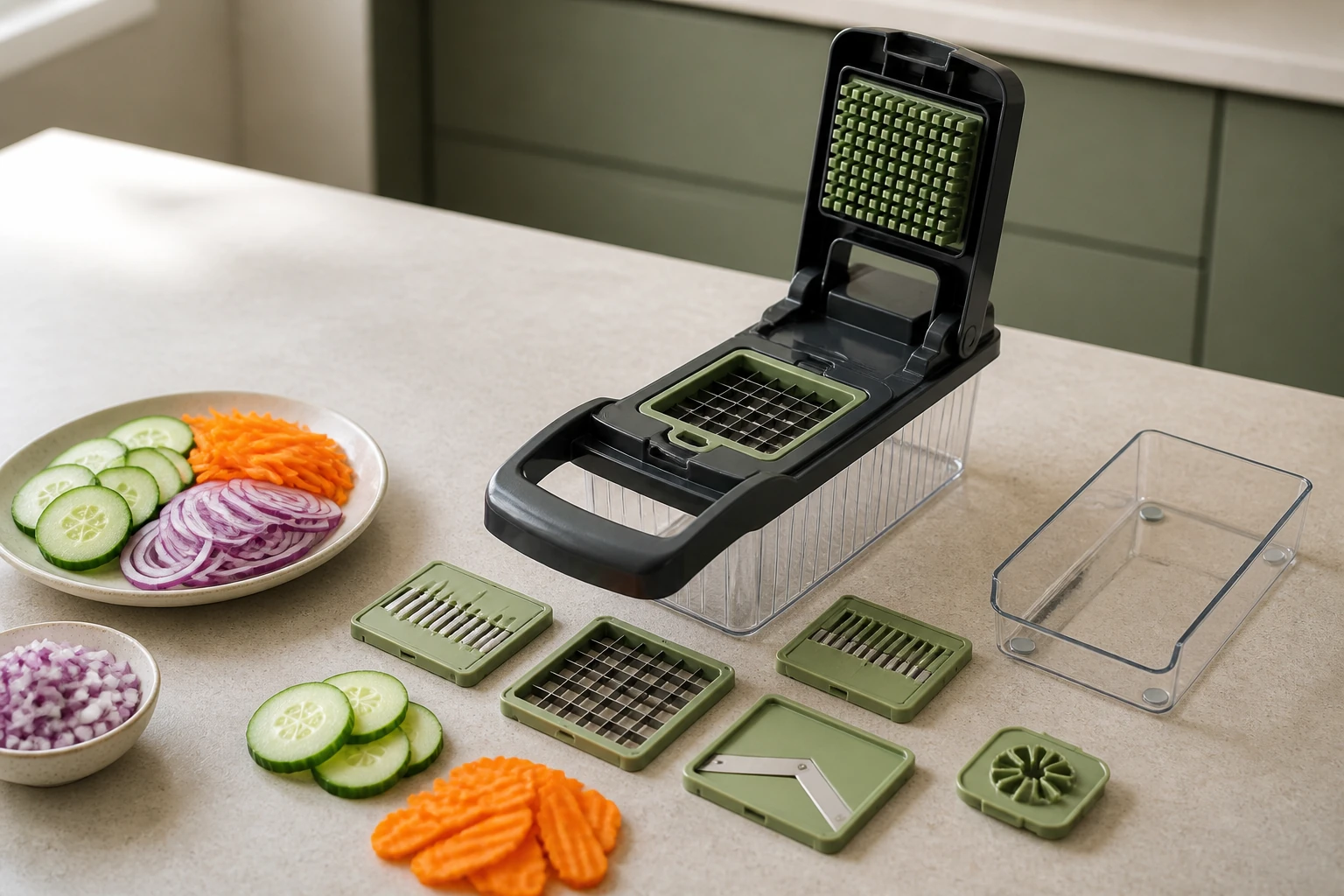
Short answer: before approving a vegetable-chopper order, compare the actual sample, written specification and quote side by side. Check the exact insert list, fit and operation, cleaning instructions, food-contact materials, retail packaging, inspection criteria and the delivered cost—not only the unit price.
This is a buyer-focused checklist, not a claim about the day's most-discussed kitchenware problem. A public r/cookware discussion about alternatives for a vegetable-preparation task illustrates that users care about the result a tool produces; one discussion is not evidence of a broader trend. For a wholesale buyer, the useful next step is to evaluate what the particular model can do and what comes in the carton.
1. Match the sample to one exact model and quotation
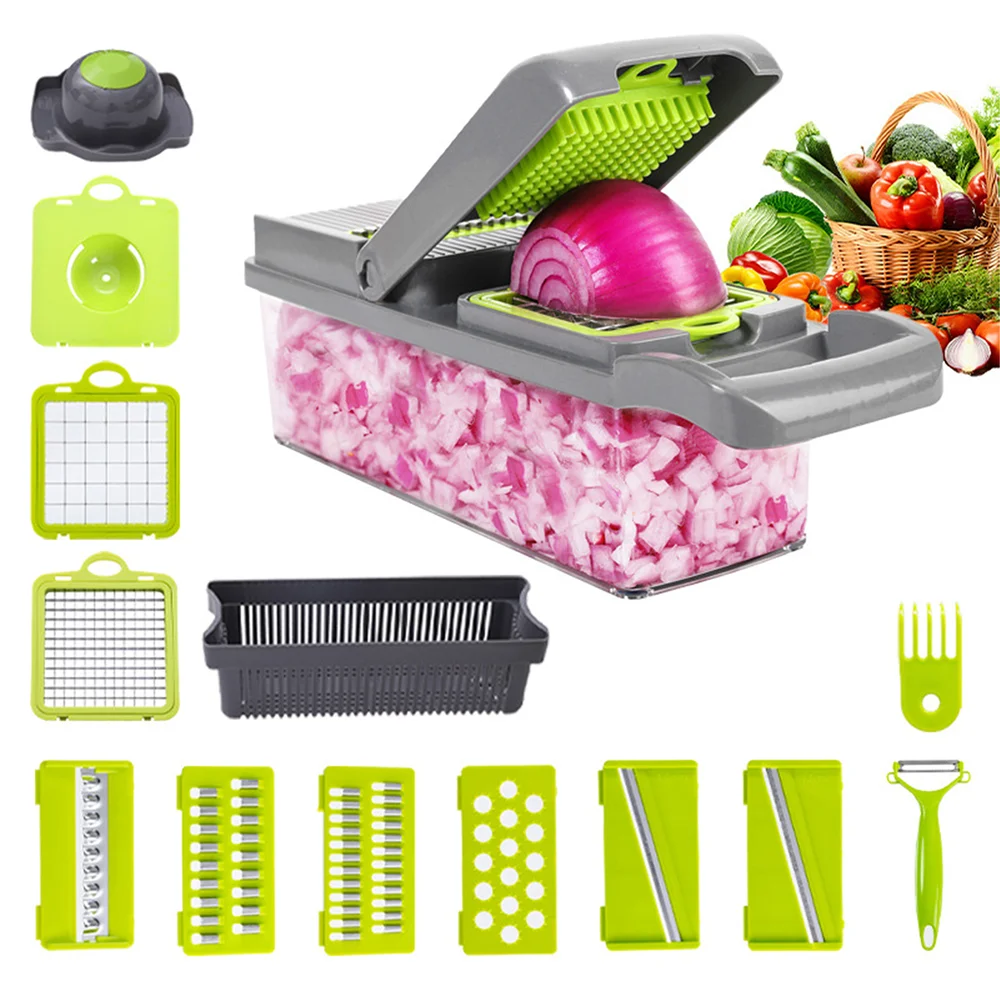
Put a model identifier on the quote, sample approval sheet and purchase order. Ask for photos or a component list that names every cutting insert and accessory in the quoted set. Similar-looking choppers can have different components. For example, the existing HEHUI VC-002 14-in-1 product page lists interchangeable inserts and a collection container, while explicitly asking buyers to confirm what the selected variant includes.
2. Inspect operation and cleaning without assuming a test result
Try the sample with the foods and preparation methods relevant to your target market. Check how the insert sits in the frame, whether the container closes securely, whether parts can be removed for cleaning, and whether there are accessible areas where residue may collect. Document your own observations rather than repeating a generic performance claim.
- Record which attachments produce the cut styles your assortment needs.
- Check handling, stability and how the blade or insert is changed safely.
- Request the model's care instructions; do not assume that any part is dishwasher-safe.
- Agree acceptable fit, finish and function before bulk production.
3. Ask for the right material and food-contact documents
Identify the material of each food-contact component in the selected variant. For EU-bound orders, the European Commission's food-contact legislation overview describes the general framework, good manufacturing practices and additional measures for certain materials, including plastics. It also discusses documentation and traceability.
Ask the supplier which current test reports or declarations cover this model, these materials and your destination market. A factory audit or a test for a different article does not by itself establish that the selected chopper meets every applicable requirement. Buyers should verify requirements with their importer or compliance adviser.
4. Separate stock, logo and retail-packaging minimums
An existing configuration, a printed logo and custom retail packaging need not have the same minimum quantity. The VC-002 page currently lists a stock starting quantity of one set, a logo MOQ of 100 sets and a custom-packaging MOQ of 1,000 sets; these are listed starting points, not a blanket offer. Ask for updated availability, prices, samples and terms for your configuration.
For retail, confirm the artwork and language on the box, barcode placement, inserts and carton markings. Check that packing protects the tool and loose inserts in transit.
5. Define acceptance checks before placing the order
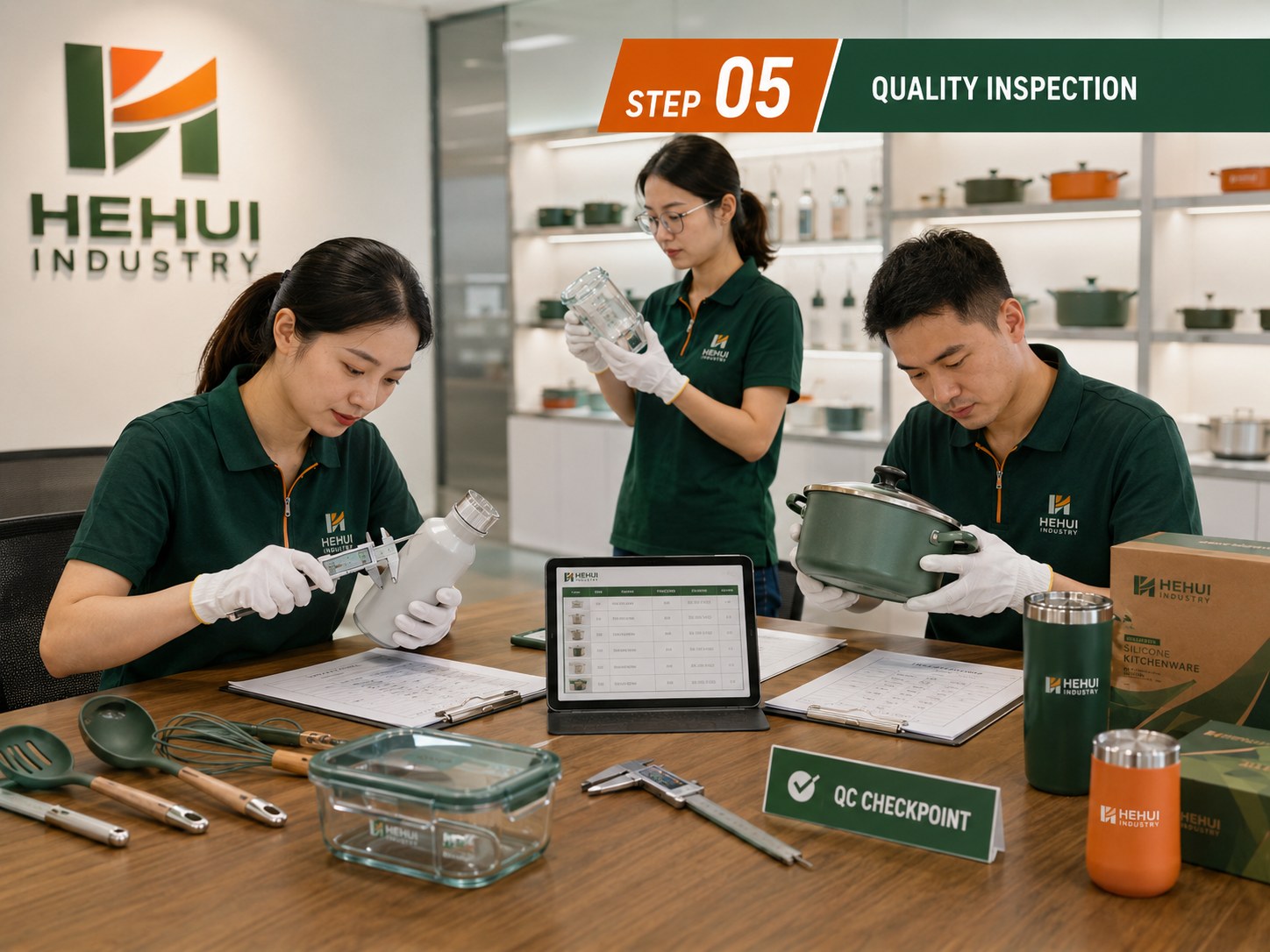
Before production, agree what will be checked on a sample and on the finished order: parts count, blade installation, lid and container fit, functional operation, finish, labels, carton quantity and packing. Agree how an issue will be recorded and resolved. A practical inspection checklist makes supplier comparisons more meaningful than a photo alone.
6. Request a product-plus-shipping quote
Give the supplier the model, quantity, country or port of destination, branding and packing requirements, and preferred delivery terms. Ask the quote to identify product, customization, packaging and freight items separately, as well as the assumptions behind the quoted route and delivery point.
Questions wholesale buyers often ask
Can I compare a stock sample with a custom-branded order?
Yes, but ask which components, materials and packaging would change. If they do, approve the relevant final configuration before committing to production.
Is a certificate logo enough to approve an import?
No. Review the complete, current document and its named model, material, test scope, dates and destination-market applicability with the responsible importer.
What should I send to request a useful chopper quote?
Send a product link or model, required inserts or features, quantity by variant, destination, logo artwork or packaging brief, intended market and any documentation request. Ask the supplier to confirm any assumptions.
Ready to review a chopper sample?
Share the selected model or reference, target quantity, destination and private-label needs. Request the current product configuration, sample options, applicable documentation and shipping terms in one conversation.
Request a Product + Shipping Quote ↗Research context: one public r/cookware discussion (an illustration of a user question, not trend data); European Commission food-contact legislation; Hehui VC-002 product page. Product availability and compliance scope must be checked for each order.