

Short answer: do not treat sample approval as the end of quality control. Convert the approved sample into a written specification, record the agreed version, define production and packing checkpoints, and compare the finished goods with the approved reference before shipment.
This article follows a buyer concern raised in a public r/FBAsourcing discussion: a good sample is useful, but the commercial question is whether the later production run matches the approved reference. The discussion is an individual community post, not a market survey; this guide uses it as a prompt for a practical control checklist rather than as proof of a universal trend.
The same logic applies whether you are sourcing a vegetable chopper, rotary grater, salad spinner or another kitchen-preparation tool. Hehui’s wholesale ordering guide separates product, packaging and logistics planning; your purchasing file should do the same.
1. Freeze the approved sample before production
When a sample is accepted, record the exact version that was approved. A product name alone is not enough when similar tools can have different colors, accessories, packaging formats or component combinations.
Keep dated photos of the approved sample from several angles. The purpose is not to create a marketing image; it is to give purchasing, production and inspection teams the same visual reference.
2. Turn the sample into a written specification
Ask the supplier to confirm the current specification sheet for the selected version. Include dimensions, weight, material information, component list, color reference, packaging and any applicable documentation requested for your destination market. If a detail is still under discussion, mark it as “to be confirmed” rather than allowing the sample photo to become the only source of truth.
For example, Hehui’s manual salad-spinner page identifies model HH-2820 and a removable basket, while noting that capacity, component grades and packaging need confirmation for the selected version. That is the correct point for a buyer to request the current specification sheet and sample—not to guess from a generic photo.
3. Define production checkpoints before placing the order
A clear inspection plan should be agreed before mass production begins. The exact tests depend on the product, but a practical kitchenware checklist can cover:
- Parts count and accessory configuration.
- Visible color, finish, logo and packaging match.
- Basic operation and fit of moving or removable components.
- Dimensions and weight against the confirmed specification.
- Surface condition, edges, joins and visible defects.
- Carton quantity, labeling and protection for transport.
These are process checkpoints, not a claim that every product uses the same test method. Ask the supplier and your inspection provider to agree the method, sample size and acceptance criteria for the selected SKU.
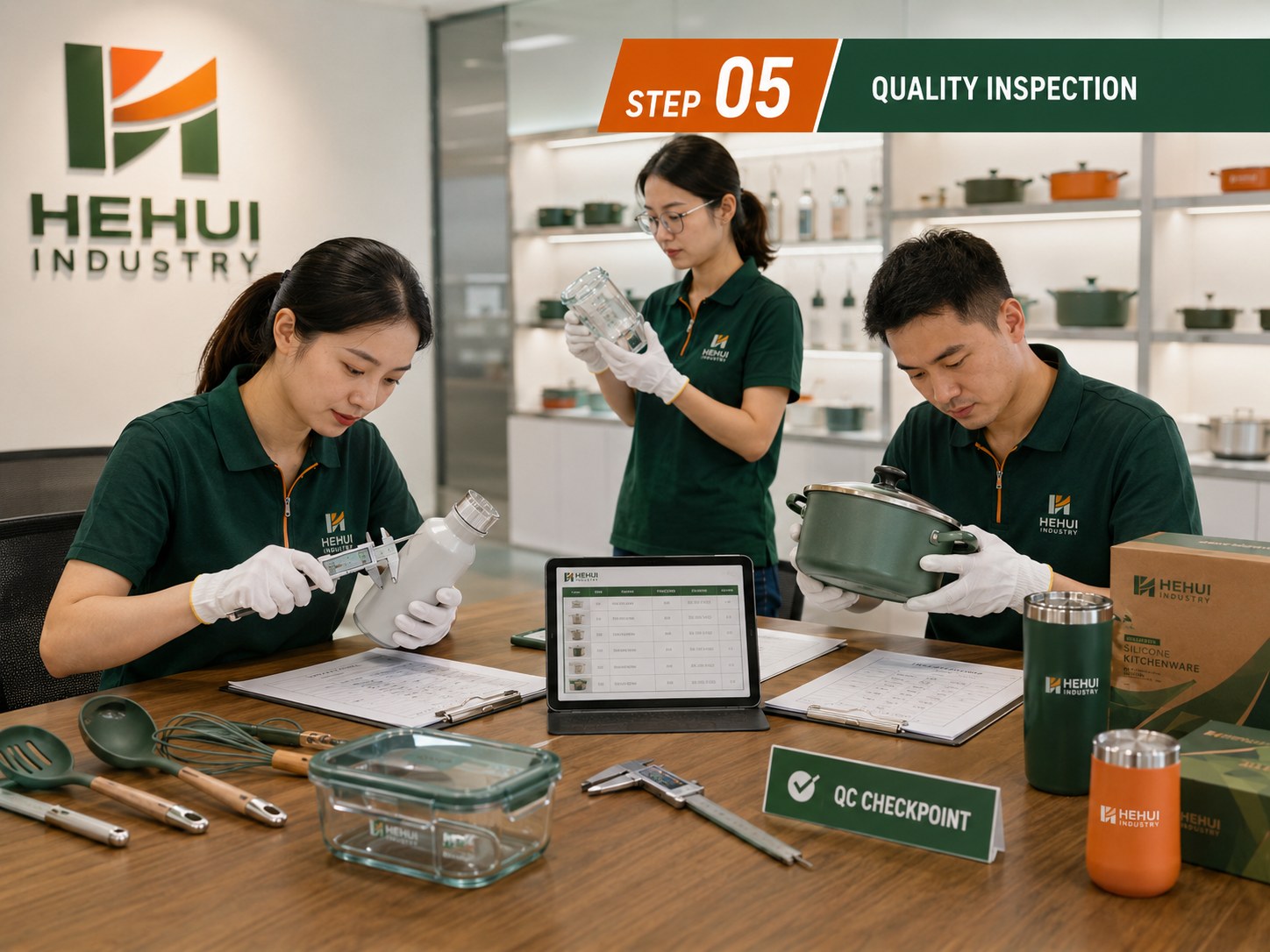
4. Match the factory check to the approved reference
During production, compare a production sample with the approved reference instead of relying only on a new product photo. Ask for photos or video that show the requested details clearly, and record the date and production stage. For higher-risk or larger orders, buyers may choose a third-party inspection or an in-person review according to their own purchasing policy.
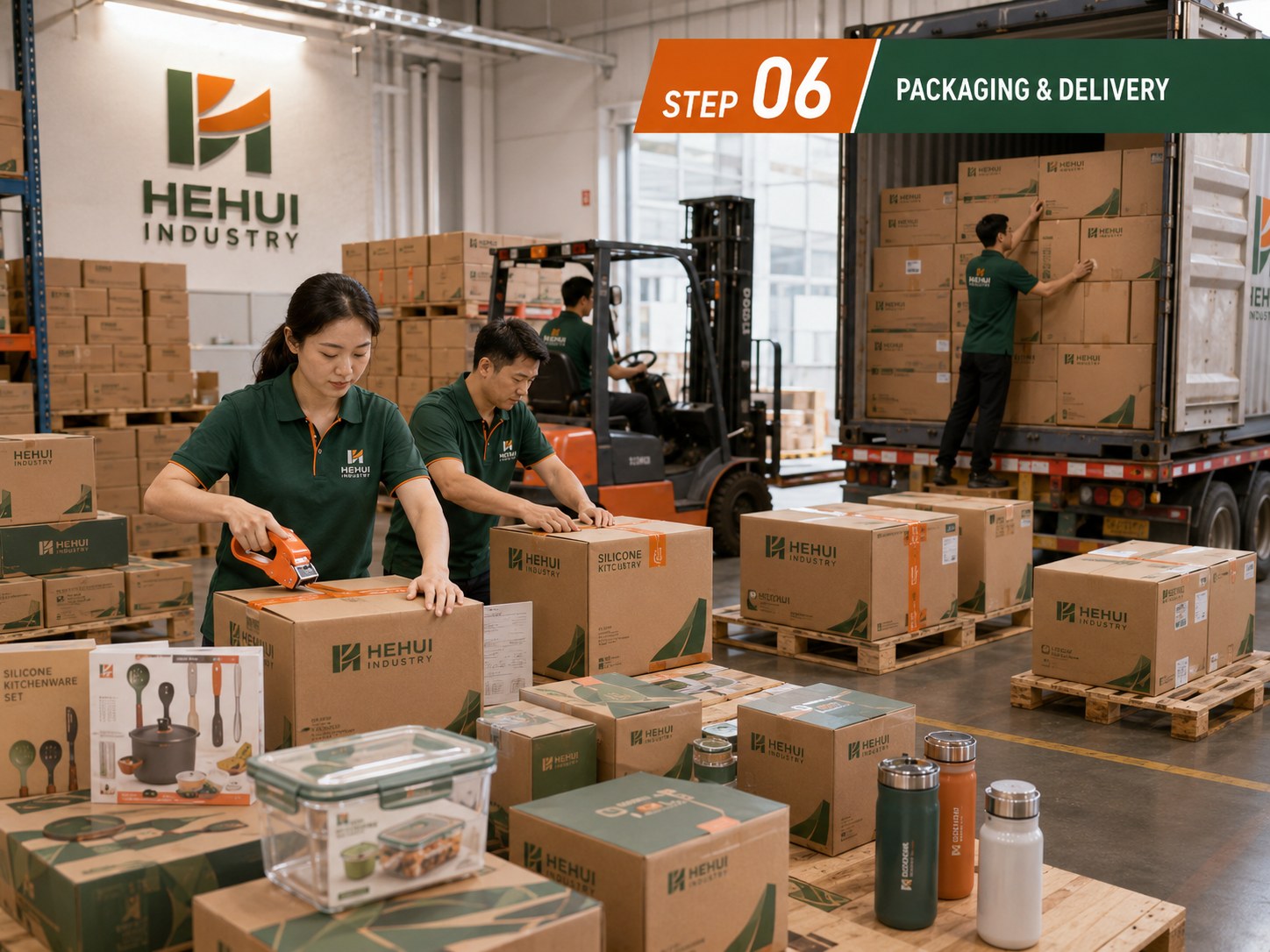
Hehui presents production, quality inspection and packing as separate parts of its ordering workflow. Keeping those stages visible helps a buyer ask better questions: what was checked, against which reference, and what happens if a difference is found?
5. Treat packaging as part of product quality
A unit can match the approved sample and still arrive with a packaging problem. Confirm the retail box, inserts, barcode or carton markings, master-carton quantity, packed dimensions and protection method before shipment. Retail packaging and export cartons should be reviewed alongside the product, not after the production run is finished.
6. Keep the quotation aligned with the approved configuration
Request separate lines for stock product, logo or color customization, retail packaging, samples and freight. Confirm whether the stated MOQ applies to stock, logo customization or a full private-label package. Hehui’s homepage lists different stock references across its kitchen-preparation range, which is why a buyer should request the minimum for the exact selected configuration.
For a useful product-plus-shipping quote, send the product link or model, quantity, destination country or port, packaging requirement, target date and any document request. This gives the supplier enough information to confirm the commercial version rather than quoting a generic listing.
Buyer FAQs
Is a passed sample enough to approve mass production?
No. The sample should become the reference for a written specification, production checks and final inspection. The buyer should define what must match.
What if a specification is not finalized?
Mark it as pending and resolve it before production or packaging is locked. Do not let an unclear item become an assumption.
Should packaging be approved separately?
Yes. Review the retail presentation, carton quantity, protection and shipping marks as part of the same order plan.
Can a supplier quote the freight from the product link alone?
A useful freight quote normally also needs quantity, destination and packing information. Request product, packaging and logistics as connected quote lines.
Want a sample-to-shipping quote for your range?
Send the product link or model, quantity, destination, packaging needs and target market. Hehui Kitchen can help organize the product, documentation and freight questions around the selected configuration.
Request a Product + Shipping Quote ↗Sources: public r/FBAsourcing discussion (buyer concern prompt, not a market survey); Hehui wholesale ordering guide; Hehui manual salad-spinner page. No unsupported statistics, customer reviews, certifications, factory counts or performance guarantees are added.